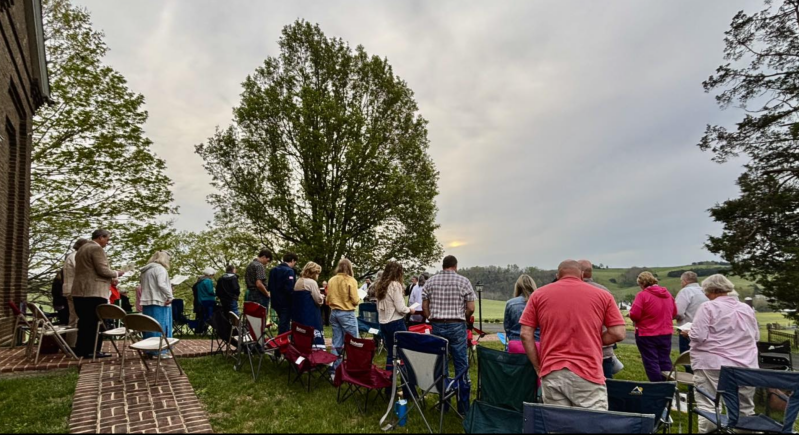
During the mid-1700s, Scotch-Irish settlers populated the upper valley of Buffalo Creek that lies between the two House Mountains and Purgatory Mountain, between Short Hill and North Mountain, drained by Colliers Creek, Toad Run, and the North and South Forks of Buffalo. These pioneers, mostly from Presbyterian backgrounds, formed a Presbyterian Society around 1758 that met in people's homes. The erection of the log sanctuary occurred in the 1760s and Presbytery recognized the congregation in 1768. The log church was octagonal in shape, the architectural design of a fort, affording a means of defense against attacking enemies. The site selected was on the eastern slope of a small hill, overlooking the Buffalo/Indian trail. Itinerant pastors served Oxford along with the other Presbyterian Churches in this part of Virginia. After approximately 50 years of service in the log church, the congregation in 1811 decided to build a stone sanctuary some 200 yards west on the crest of the hill. It was rectangular with seating in high box-like pews. When the worshipper had closed the door into the aisle, it was impossible to see anyone except the minister in the elevated pulpit.
In 1808 Andrew Baker Davidson was licensed by Lexington Presbytery. He served many churches, including Oxford, for several decades. Probably as early as 1820, Davidson began preaching in a log schoolhouse at the junction of Colliers and Black Creek. From those who worshipped there came the erection of "Shiprock Meeting House." In the early 1840's, under the leadership of Davidson, the Oxford session, the Holy Communion service, and the church records were moved to the newer facility on Colliers Creek. In 1843, at the request by a delegation from the stone church, Presbytery officially recognized the split in Oxford Church with the stone church recognized as Old Oxford and the Shiprock Meeting House called New Oxford, later, Collierstown Presbyterian Church.
In 1865 as the native sons straggled back from the defeated Confederate Army, they found their stone church building deteriorated beyond repair. Within two years after Appomattox, a building committee had been formed and bids received for building a new brick sanctuary. On January 19, 1868, a contract for $1,875 was let for the carpentry work. The men of the congregation razed the old stone church--"a sacred service no profane hands could do." The stone became the foundation and walls of the basement of the new edifice. Undaunted by the aftermath of the war and reconstruction, the Oxford congregation prevailed with the few resources that they could muster and the new building was completed without assistance from Presbytery or other outside sources.
In the 1940s, during the pastorate of Rev George H. Rector, a ministerial outreach was made with Rapps Church, whereby the Oxford pastor would preach regularly at Rapps Church and provide other ministerial services for people in the Rapps community. Many of the people who attended Rapps became members of Oxford Church. On September 26, 1948, the congregation called Dr. George West Diehl to become its next pastor. Dr. Diehl, who was married to Iva Carruth Shafer, daughter from the Oxford community, came from the First Presbyterian Church in Corpus Christi, Texas, to serve in this small rural community. For twenty years, Dr. Diehl's strong, dedicated leadership as minister, mentor, local historian, and community spokesperson made an indelible mark not only on Oxford but also throughout Rockbridge County and beyond.
Reference: Diehl, G.W.(1971). Old Oxford and Her People. Verona, VA:McClure Printing Company.
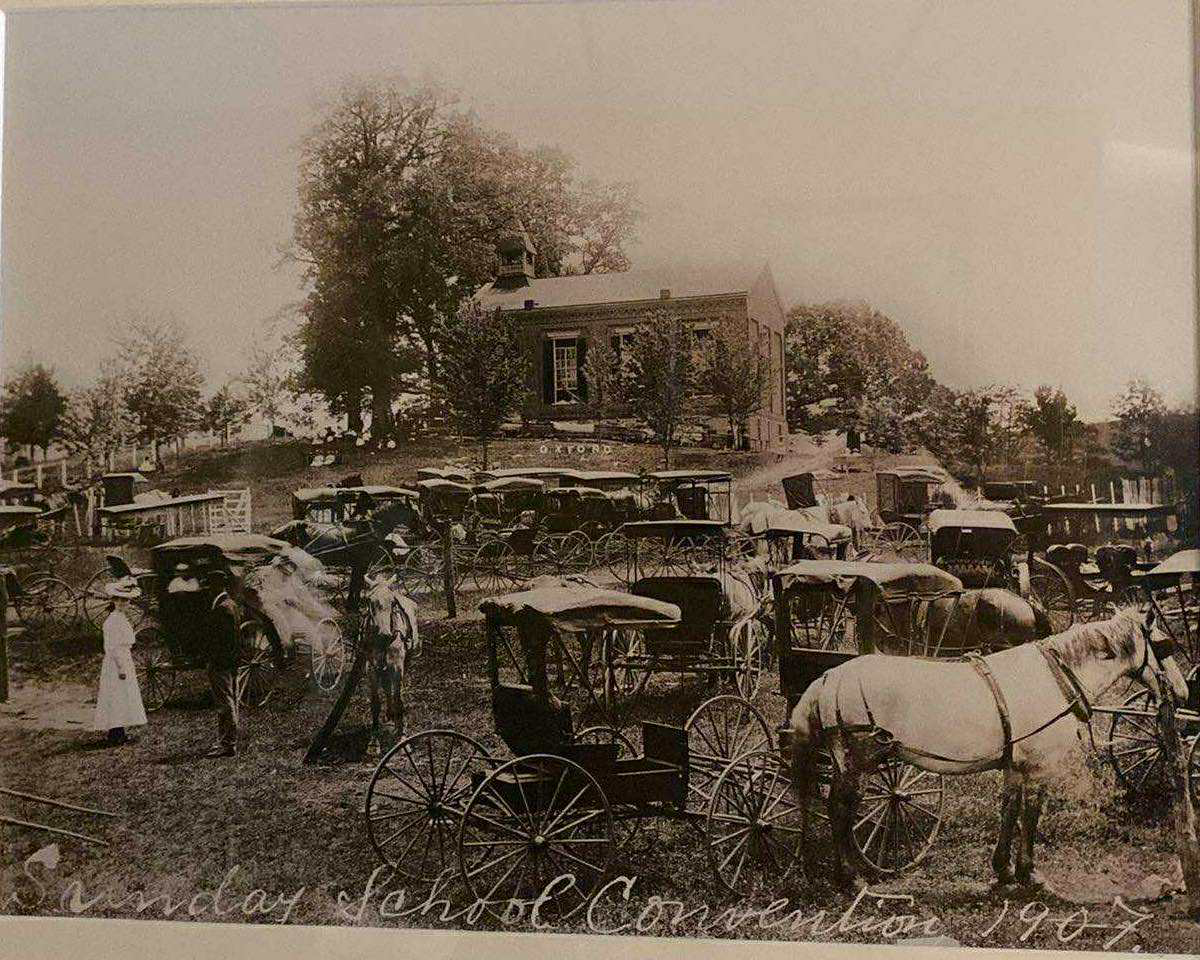
Sunday school convention at Oxford Presbyterian Church, in 1907.
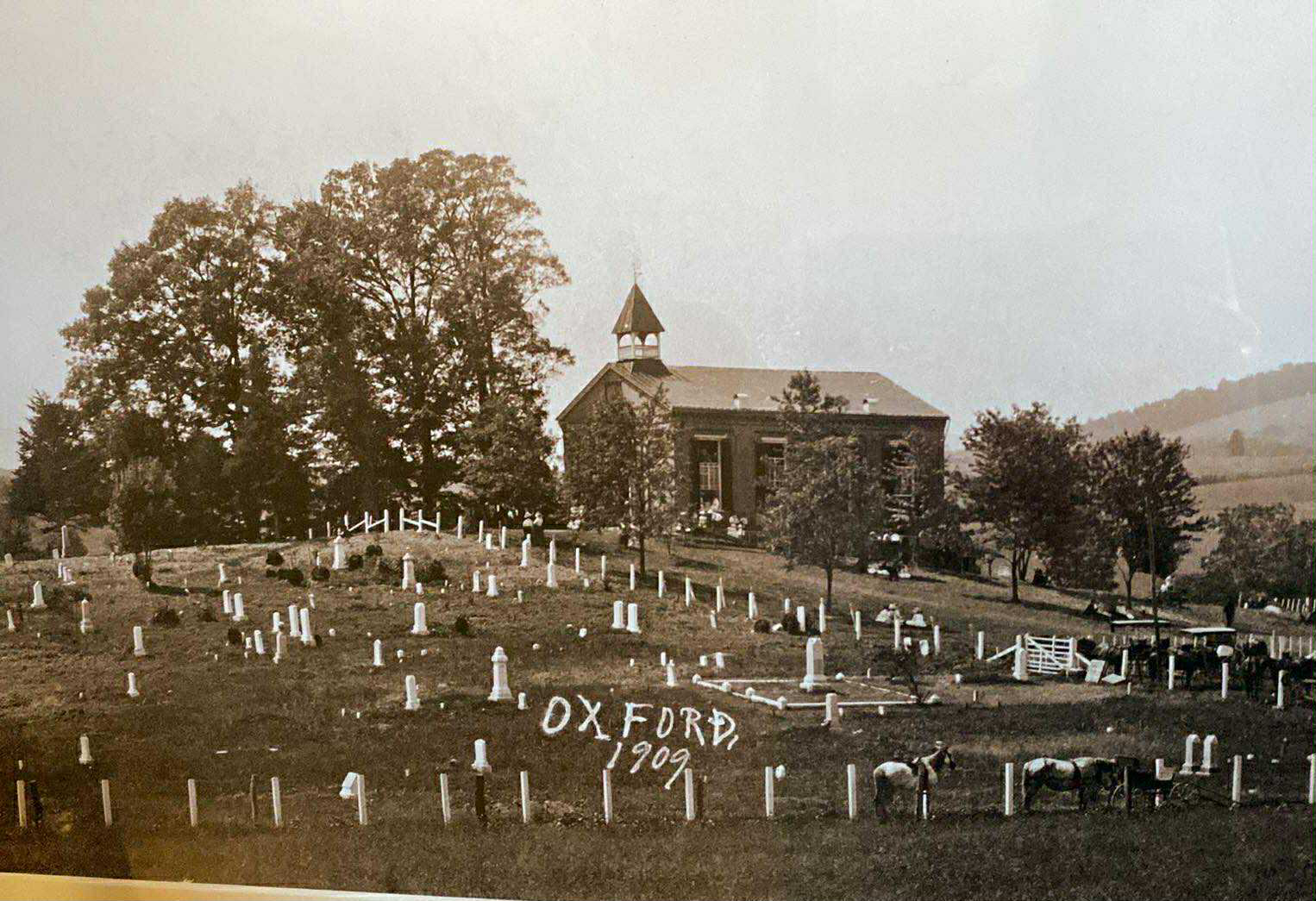
Oxford Presbyterian Church in 1909.
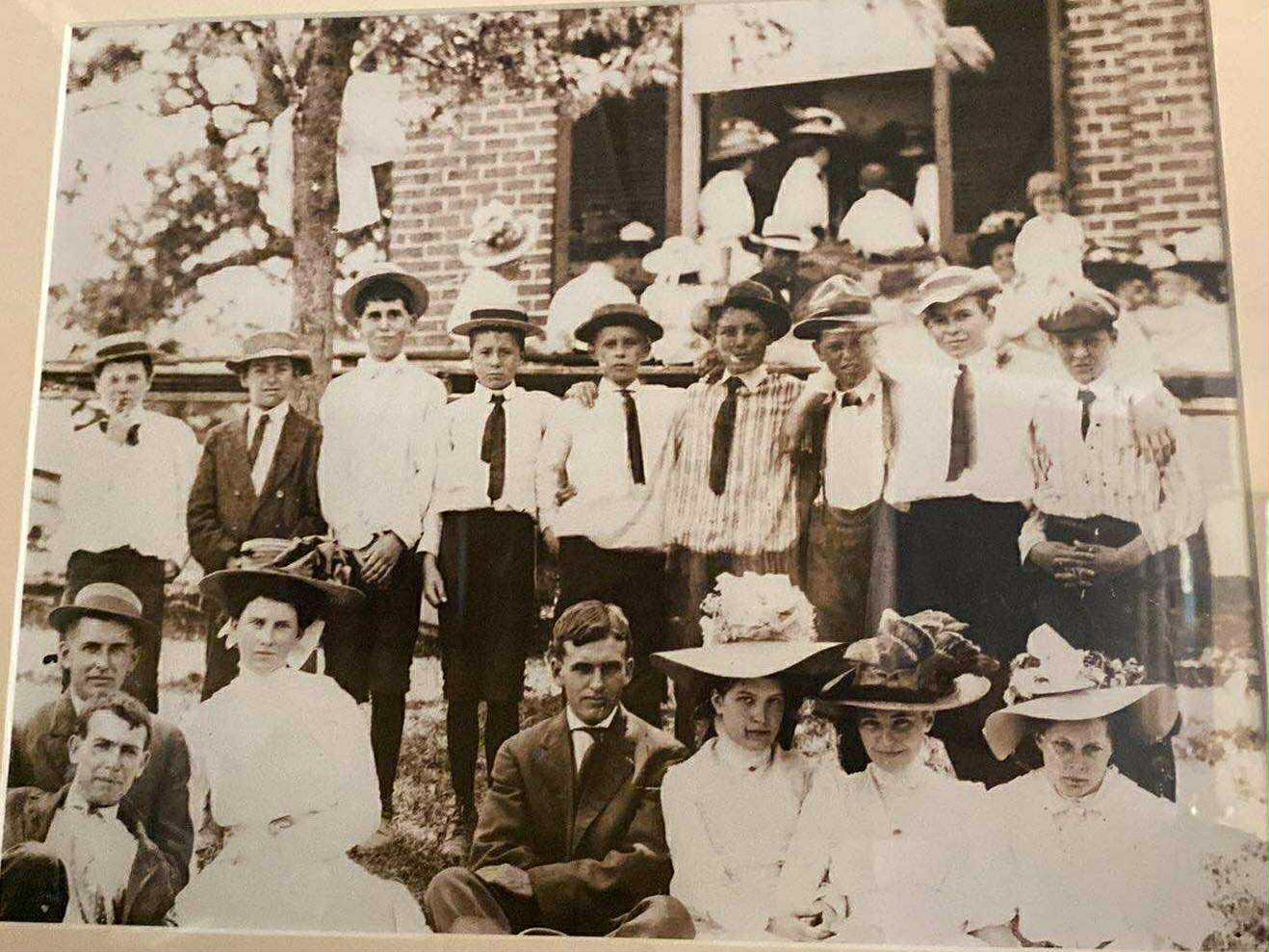
This picture was taken during a Sunday service at Oxford Presbyterian Church. Date unknown.

In August 1952, at the front of Oxford Presbyterian Church.

Homecoming at Oxford Presbyterian Church on August 11, 1992.
In Jesus Christ, God calls people to faith and to membership in the Church, the body of Christ. Baptism is the visible sign of that call and claim on a human life and of entrance into the membership of the church. The baptism of children witnesses to the truth that God's love claims people before they are able to respond in faith. The baptism of those who enter the covenant of membership upon their own profession of faith in Jesus Christ as Lord and Savior witnesses to the truth that God's gift of grace calls forth a response of faithfulness. Thus, the triune God, incarnate in the life, death and resurrection of Jesus Christ, gives to the church not only its mission but also its understanding of membership.
-From the PCUSA Book of Order
Gallery